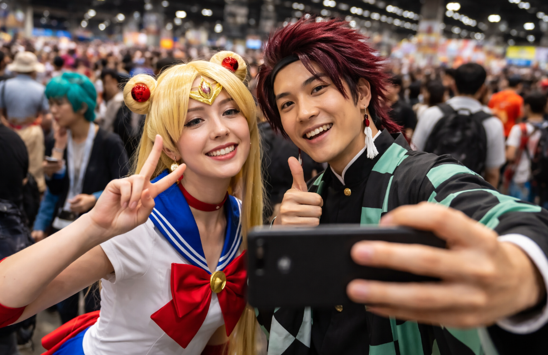
Manga costumes attract beginners, regular convention visitors, collectors, casual partygoers, creators who want better photos, fans who simply want to step into the skin of a favourite character for a day. The difficulty rarely comes from finding “a” costume. The real challenge is finding one that looks convincing, fits properly, survives wear, and matches the exact character version you have in mind. Many listings look impressive in product photos, yet disappoint when the fabric arrives thin, the colours are wrong, the wig shade is off, or the sizing feels completely detached from reality. That is why a smart purchase starts with method rather than impulse. A good manga costume should help you recognise the character instantly, move well, photograph well, and remain comfortable for several hours. Whether the goal is a comic con, a themed birthday, a photoshoot, a school event, or a collector-level cosplay build, the best option is usually the one that balances visual accuracy, build quality, delivery reliability, and price. The market is broad, sometimes confusing, often crowded with near-identical offers. With the right approach, though, it becomes much easier to spot the shops, materials, details, and finishing choices that separate an outfit that merely resembles a character from one that truly lands the part.
What makes a manga costume worth buying
A strong manga costume is not defined by popularity alone. It is defined by accuracy, comfort, finishing, sizing, durability, and consistency with the source material. Many shoppers focus first on the character, which is understandable, yet the better approach is to focus on the build of the costume itself. A clean outfit with stable stitching, balanced colour tones, a sensible cut, and accessories that do not look like an afterthought will nearly always create a better result than a flashy but poorly assembled set. This matters even more for manga characters because fans tend to notice details very quickly: collar shape, cuff width, emblem placement, belt thickness, jacket length, skirt pleats, trouser line, or the exact shade of a haori can completely change how authentic the costume feels.
A reliable product page should tell you more than the character name. It should show front views, side views, close shots of the fabric, included accessories, and clear size information. It should also distinguish between a basic outfit, a deluxe version, and a package that includes extras such as wigs, props, cloaks, socks, gloves, shoes, belts, or armour pieces. When a seller gives only one front-facing image and a vague description, caution is sensible. The best manga costume purchases usually happen when the buyer slows down and compares the garment as if it were tailored clothing rather than novelty wear.
Fabric is another decisive point. Polyester blends dominate the market because they are affordable and easy to print, though not all polyester fabrics behave the same way. Some hold colour well and drape neatly. Others shine too much under artificial light, crease badly, or feel thin enough to spoil the silhouette. Cotton blends can be more comfortable for long wear. Structured pieces such as jackets, uniforms, capes, battle coats, or kimono-style layers need enough weight to sit correctly on the body. A costume that hangs like tissue paper can flatten the whole look. In cosplay, fabric is often the stage beneath the performance. When it fails, the illusion breaks like thin ice.
A smart buyer also thinks about use case. A party costume does not need the same construction as an outfit for all-day convention wear. A photoshoot costume may prioritise visual impact over long-term comfort. A beginner may prefer a complete set that reduces guesswork. A more experienced cosplayer may buy the base clothing from one shop, the wig elsewhere, then upgrade accessories separately. That is often how the best looks are built: one careful layer at a time rather than through a single rushed click.
Which shops are the most useful when you start comparing options
When shoppers ask where to find the best manga costumes, they usually want a shortcut to stores that feel curated rather than chaotic. That makes specialist retailers more appealing than random multi-category marketplaces. A focused shop tends to group costumes by series, character, theme, size range, and accessory type, which saves time and reduces the risk of buying an outfit that only loosely resembles the original design. For someone comparing styles, fabrics, and complete sets, browsing an anime store can be a practical first step because the catalogue is already shaped around anime and manga culture rather than generic fancy dress. That usually means a better chance of finding character-specific details, coordinated accessories, themed product categories, and visuals that make more sense to actual fans.
This does not mean general marketplaces are useless. They can offer lower prices, more sellers, and occasional hidden gems. The problem is inconsistency. One seller might deliver a sharp costume with decent seams and accurate trims, while another uses the same promotional image and ships an inferior copy. Specialist shops often reduce that lottery effect. They may not always be the cheapest, though they are more likely to present products in a way that helps the buyer judge whether the costume is meant for light fun, collector display, casual cosplay, or a more polished public appearance.
The best stores usually share several qualities. They organise products cleanly. They show multiple images. They separate costumes from wigs and props. They include useful descriptions. They help shoppers understand whether the item is inspired by a school uniform look, battle outfit, ceremonial robe, modern streetwear style, or fantasy armour. That context matters because manga costumes vary enormously. A sailor-style school outfit from a slice-of-life series has very different expectations from a layered demon slayer uniform, a sports manga tracksuit, or an ornate fantasy ensemble with belts, buckles, and decorative panels.
Some stores also perform better because they understand that costume shopping is rarely about clothing alone. Buyers often need the full visual path: outfit, wig, prop, shoes, add-on accessories, styling ideas. That is why sections dedicated to anime cosplay are especially useful. They place the costume inside the wider logic of character recreation. That broader view helps buyers avoid a common mistake: spending most of the budget on the outfit, then rushing the remaining elements and ending up with a look that feels unfinished. A good retailer helps you see the whole chessboard rather than a single piece.
How to spot quality before placing an order
The strongest buyers behave almost like costume inspectors. They read closely, zoom in, compare images, and ask whether the product page answers the real questions a fan would have before spending money. One of the clearest warning signs is a listing with dramatic photos but minimal technical detail. Attractive images can be useful, yet a costume should also be backed by practical information. Material composition, included items, closure type, washing advice, size chart, lead time, and delivery expectations all matter. Without that, the purchase becomes a guess.
Start with the silhouette. Does the outfit look structured in the same way as the character design? A coat that should sit close to the torso but appears boxy may have poor tailoring. A skirt that should hold crisp pleats but falls flat may use cheap fabric. A cape with weak edging may curl at the hem. Details like cuffs, collars, decorative piping, insignia, and printed symbols deserve close inspection. In manga costumes, these elements often carry more recognisable power than the base garment itself. A slightly inaccurate shirt can pass. A badly placed emblem usually cannot.
Check whether accessories are functional or purely decorative. Belts should fasten properly. Sashes should have enough width. Gloves should match the outfit style. Footwear covers should look intentional rather than flimsy. Some lower-tier costumes include props or armour parts made from very light materials that photograph adequately from a distance but lose credibility up close. For event wear, weight and finish matter. For photos only, appearance may be enough. Knowing your goal keeps you from overpaying or underbuying.
Sizing deserves almost forensic attention. Do not assume your usual UK clothing size will match a cosplay listing. Compare your measurements with the seller’s chart: chest, waist, hips, shoulder width, sleeve length, height. When a costume has a fitted jacket, uniform top, corset element, or narrow trousers, a poor size choice can ruin the effect even if the costume itself is well made. Alteration potential is also worth considering. Simple hems and waist adjustments are manageable. Rebuilding a fitted bodice or reworking a complex military-style coat is another story entirely.
Those single checkpoints help cut through the noise. A costume that performs well across all of them is far more likely to be worth the spend than one that wins only on price or stock photos. In practice, good costume shopping is less about excitement alone and more about clean judgement.
Are ready-made costumes better than custom or upgraded looks
Ready-made manga costumes are often the best starting point for most buyers because they save time, reduce complexity, and make it easier to enter a convention or party scene without building everything from scratch. For a popular character, a well-chosen ready-made set can look excellent, especially when the design relies on recognisable colours and shapes more than intricate armour or couture-level tailoring. This route works well for newcomers, last-minute shoppers, gift buyers, or anyone who values convenience.
That said, the “best” manga costume is not always the one that arrives as a complete package. Sometimes the most convincing result comes from an upgraded approach. That might mean buying a solid base outfit, then replacing weak accessories, improving buttons, reshaping a collar, adding lining, adjusting the hem, or sourcing a better wig. A ready-made costume is like a sketch in pencil. With a few informed changes, it can become something much sharper. This hybrid route is often ideal for fans who want a better finish without paying for full custom work.
When ready-made is the smarter option
Ready-made costumes shine when the buyer wants speed, simplicity, and a controlled budget. They are especially useful for mainstream manga or anime characters because more sellers produce them, competition increases, and quality has improved over time in several niche shops. For school uniforms, sportswear, basic demon slayer-style outfits, simple robes, maid costumes, idol costumes, or casual streetwear-inspired character looks, ready-made sets can provide very respectable results. The visual success often depends less on the garment being handcrafted and more on the overall styling. If the colours are right, the fit is sensible, and the key accessories are present, the costume can look striking in person and on camera.
Another advantage is predictability of cost. Custom work can rise quickly once fabric, labour, fittings, shipping, and accessory upgrades are factored in. Ready-made options keep the ceiling lower. They also offer an accessible way to try cosplay before investing heavily. Someone attending one convention or testing whether a character suits them may not need a bespoke piece. In that case, a good ready-made costume is not a compromise. It is simply the right tool for the occasion.
There is also less pressure. A ready-made outfit allows beginners to focus on wearing the character, learning how the clothes move, seeing which parts feel awkward, and understanding what matters most to them. Some discover that the wig is more important than expected. Others realise that footwear or comfort matters most during a long event. That experience becomes valuable for later upgrades. In a sense, the first costume often acts as a map. It shows where better choices can be made next time.
When a custom or upgraded build makes more sense
Custom or upgraded manga costumes become far more attractive when the character design is complex, the event is important, or the wearer wants closer screen-to-page fidelity. Long coats, layered uniforms, decorative battle outfits, intricate fantasy dresses, ceremonial garments, or heavily structured looks often benefit from a level of tailoring that mass production struggles to match. The fit becomes sharper. The fabric choice becomes more intentional. Trims, embroidery, fastenings, and pattern lines can be brought much closer to the source design.
An upgraded build also suits buyers who care deeply about photography, stage presence, competition, or social media presentation. Cameras can be unforgiving. Inaccurate stitching, weak fabric, poor trims, and flat silhouettes show up quickly under good lighting. By improving the most visible areas, even without going fully custom, a cosplayer can elevate the whole result. Changing the belt, reinforcing the shoulder shape, replacing cheap printed insignia with stitched patches, or using better wig styling can transform the costume from acceptable to memorable.
This path is also sensible for characters with multiple versions. Many manga and anime characters appear in training outfits, school looks, battle uniforms, travel wear, festival clothing, alternate arcs, or upgraded forms. Mass-market shops may only stock the most famous version. A custom maker or a modified base costume gives you freedom to create the specific look you want rather than the version the market happens to push. For fans who care about nuance, that freedom often matters more than convenience.
See also: Advanced Digital Growth Approaches Transforming Business Marketing
How to choose the right costume for conventions, parties and photos
The best manga costume for one occasion may be the wrong choice for another. Event context shapes almost every sensible decision: fabric weight, shoe comfort, accessory safety, ease of movement, heat management, and how much time you will spend standing, walking, sitting, or posing. A convention usually demands endurance. A house party allows more flexibility. A dedicated photoshoot may justify a less comfortable outfit if the visual impact is worth it.
For conventions, practicality matters almost as much as looks. You may be wearing the costume for many hours, queuing, eating, moving through crowded halls, and carrying bags. In that setting, breathable fabric, stable fastenings, manageable layers, and comfortable shoes become essential. Oversized props, fragile trims, and heavy coats can turn into problems quickly. The best convention costume is often one that still looks good after several hours rather than one that looks perfect for ten minutes. Think of it as choosing a vehicle for a long road rather than admiring it in a showroom.
For parties, the balance shifts slightly towards recognisability and ease. Guests should identify the character quickly. The costume should allow movement, sitting, dancing, and casual socialising without constant adjustment. Simpler silhouettes often work best here. If the character relies on one iconic coat, wig colour, symbol, or weapon prop, focus on those recognisable markers instead of chasing absolute precision across every seam.
Photoshoots are different again. Here, visual drama becomes more important. Layering, texture, shape, and detail all matter because the camera reads them strongly. A richer fabric, more accurate accessories, styled wig, and better-fitted garment can turn a decent cosplay into something visually powerful. Lighting will expose shortcuts. At the same time, a photoshoot gives you control over breaks, posing, and support, so comfort becomes slightly less dominant than appearance. This is where upgraded or semi-custom costumes often earn their value.
Budget also changes with the setting. Spending more makes sense when the costume will be reused, photographed heavily, or worn at a major event. It makes less sense for a one-off novelty use. The smartest buyers align the spending level with the purpose. That single habit prevents a great deal of disappointment.
Which details separate a believable look from a disappointing one
A manga costume rarely succeeds because of the outfit alone. The overall result depends on fit, wig quality, posture, styling, accessories, and confidence in wearing the character. Someone can buy an accurate costume and still look unfinished if the wig is poorly shaped, the collar sits badly, or the shoes clash with the design. On the other hand, a modestly priced outfit can become highly convincing when the styling is thoughtful and the silhouette feels correct.
Fit is usually the first invisible advantage. When a costume sits properly on the shoulders, waist, sleeves, and hemline, it looks intentional. Even non-cosplayers can sense when clothing belongs on the body. Alterations are often the quiet heroes of a successful look. A shortened sleeve, adjusted waist, improved trouser break, or neater skirt length can create an immediate leap in quality. That is one reason experienced cosplay buyers rarely judge a costume straight from the parcel without considering what can be improved.
Wigs matter enormously for manga characters because hair is often one of the most iconic features. Colour accuracy counts, though shape is just as important. A cheap wig in the perfect colour can still fall flat if it lacks volume, layering, or character-specific styling. If budget is limited, many cosplayers prefer to buy a decent costume and dedicate time to styling the wig rather than overspending on a single garment detail. Hair frames the face; it often carries the first impression before the costume itself is fully seen.
Accessories finish the language of the character. Scarves, belts, gloves, earrings, pins, hairpieces, sheaths, pouches, socks, footwear covers, badges, and props may seem secondary, yet they often provide the punctuation that makes the sentence complete. Too many weak accessories can cheapen the outfit. A few accurate ones can lift it sharply. This is why buyers should compare bundle contents carefully. Sometimes a cheaper base costume plus selected accessory upgrades produces a better result than a more expensive “complete” set packed with low-grade extras.
There is also the matter of character match. The best manga costume is not merely the one with the highest quality. It is the one that suits the wearer’s goals, confidence, body comfort, and event needs. Some characters require dramatic presence. Others rely on simple clothing worn with the correct energy. When the costume and the wearer feel aligned, the result lands naturally. It stops looking like fabric on a hanger and starts feeling like a role inhabited.
What usually causes regret after buying a manga costume
Most costume regret comes from five mistakes: rushing the purchase, trusting one image, ignoring measurements, underestimating accessories, and choosing price over all else. Each of these errors is avoidable with a little discipline. The trouble is that costume shopping often happens under pressure, especially before conventions, themed parties, or seasonal events when stock begins to disappear.
Rushing leads buyers to accept vague descriptions and skip comparison. Trusting one image leads to disappointment when the delivered item differs in colour, cut, or included pieces. Ignoring measurements results in poor fit, which can make even a decent costume look wrong. Underestimating accessories creates unfinished results. Chasing the lowest price often brings thin fabric, inaccurate prints, weak seams, or delivery issues that make the saving feel false.
Another cause of regret is choosing a character version too quickly. Many manga characters have multiple outfits, and fans often realise later that they preferred a different arc, season, or form. Taking a little extra time to select the exact version can improve satisfaction far more than spending extra money. A costume tied to your favourite visual moment from the series will almost always feel better to wear than one chosen only because it appeared first in a search result.
Planning ahead solves much of this. Good buyers leave room for shipping, minor alterations, wig styling, missing accessory replacements, and test wear before the event. That small buffer turns a stressful purchase into a manageable project. In costume buying, calm timing is often as valuable as a bigger budget.
The shops and choices that tend to work best
The best manga costumes are usually found where selection, clarity, and product detail come together. A specialist retailer often gives a better starting point than a random marketplace, especially when you want stronger visual accuracy and easier comparison between outfits, wigs, and accessories. Quality shows up in fabric, fit, finishing, and the logic of the full look rather than in flashy photos alone. A ready-made costume can be excellent for convenience, while an upgraded or custom build makes more sense for complex characters or important events. If you want a result that feels convincing, shop with the character, occasion, and comfort level in mind. That approach tends to lead not only to a better costume, but to a better experience wearing it as well.